The Brilliance of the Navajo Germantowns: Part II
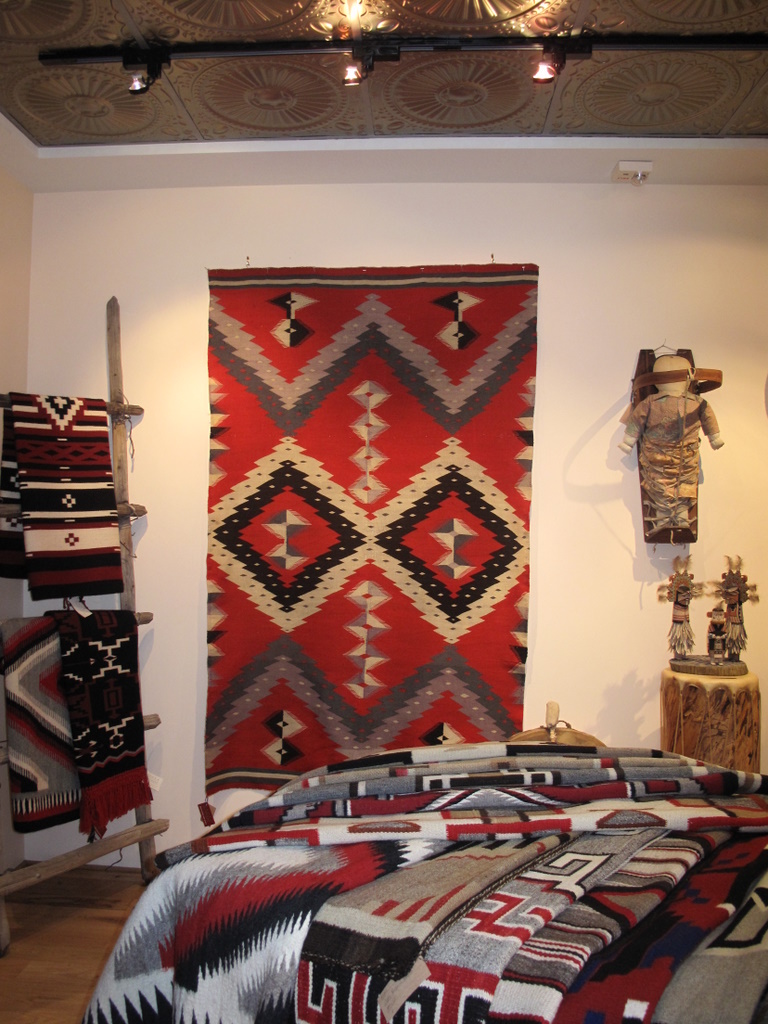
An 1880’s Germantown at the River Trading Post in Scottsdale, AZ.
Tempe, AZ I didn’t say which Sunday I would do the next installment on the Germantowns did I? This time of year offers more than it’s fair share of distractions and writing articles fell by the wayside somewhere between the recipe box and the post office. But, it’s Sunday again and I’ve got some time to continue showing you the marvels of Germantown weaving that we found on Main St. in Scottsdale. At the River Trading Post, we saw an excellent example of the heights of design and craftsmanship that the Navajo weavers achieved during this period. The weaving in the picture above was created in about 1880 and shows the facility that the Navajos had developed with manipulation of color within design motifs, adapting borrowed design elements into a uniquely Navajo geometry.
This particular piece has some wear in the center that has exposed a few of the fine plied cotton string warp threads. You can see a close view of them and the Germantown yarns in the picture below (and you can click on the picture for a larger view). Germantown yarn was plied yarn intended for knitting. The earliest yarns were three ply and later Germantown is four ply. It’s a fairly fine yarn, between a sport and DK or double knitting weight. Although some early Germantown yarn was dyed with natural colorants, most of it was dyed with coal tar derived aniline dyes, especially after the Civil War.
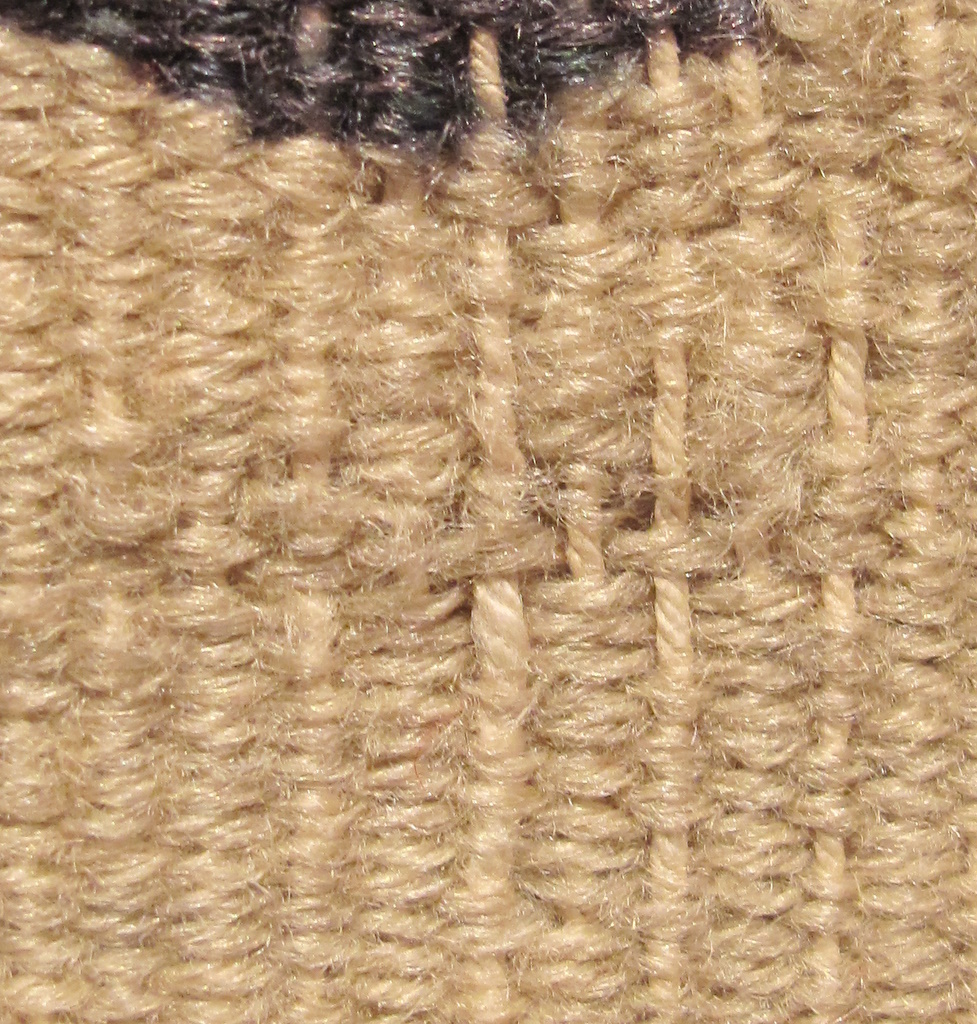
A detailed view of the Germantown weaving in the picture above. You can clearly see the plied wool weft and the cotton warp.
After the Navajos had returned from the Long Walk, traders began to stock the Germantown yarn and cotton warp, but this was costly for the weavers and only the best could sell their work at a price that would justify the investment. Used for their intended purpose, Germantowns were not good blankets and the market for them reflected that. The combination of cotton warp and machine spun worsted produced a blanket that had poor insulation and wearing qualities. Potential buyers considered them to be inferior to the handspun Late Classic and Chief blankets that preceded them. Many weavers put their work on hiatus, patiently building up their flocks and a supply of wool that was free in the sense that the supply of it did not depend on any outside source, which is the Navajo way of looking at it. Ironically, Germantowns became popular as wall hangings during the 1890’s, around the time that the Navajos stopped using the yarn and returned to using mostly their own handspun.
We’ve got two more stops on our gallery walk, and we’ll visit with Turkey Mountain Traders next. There we’ll look at a Late Classic piece to see some of the differences in the work. We’ll also see some authenticated raveled bayeta.
