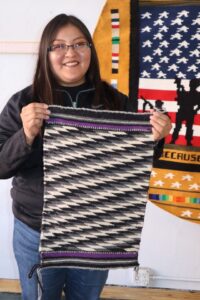
Navajo Weaving Class June 23-26 at Bear Lake (Utah-Idaho)

Join us at Navajo Weaving Boot Camp

Looking for a three day intensive Navajo weaving class in a beautiful setting?  I’m happy to announce that plans have been finalized for the eighth Navajo Weaving Boot Camp workshop at Bear Lake on the Utah-Idaho border. We’ll be weaving at the Utah State University Training Facility starting on Sunday afternoon, June 23rd and we’ll keep weaving as much as humanly possible until about noon on Wednesday, June 26th. The workshop is open to students of any skill level.  If you don’t already have a loom, students will be provided with plans for building one or you can purchase one from the workshop organizers.  

Class Details

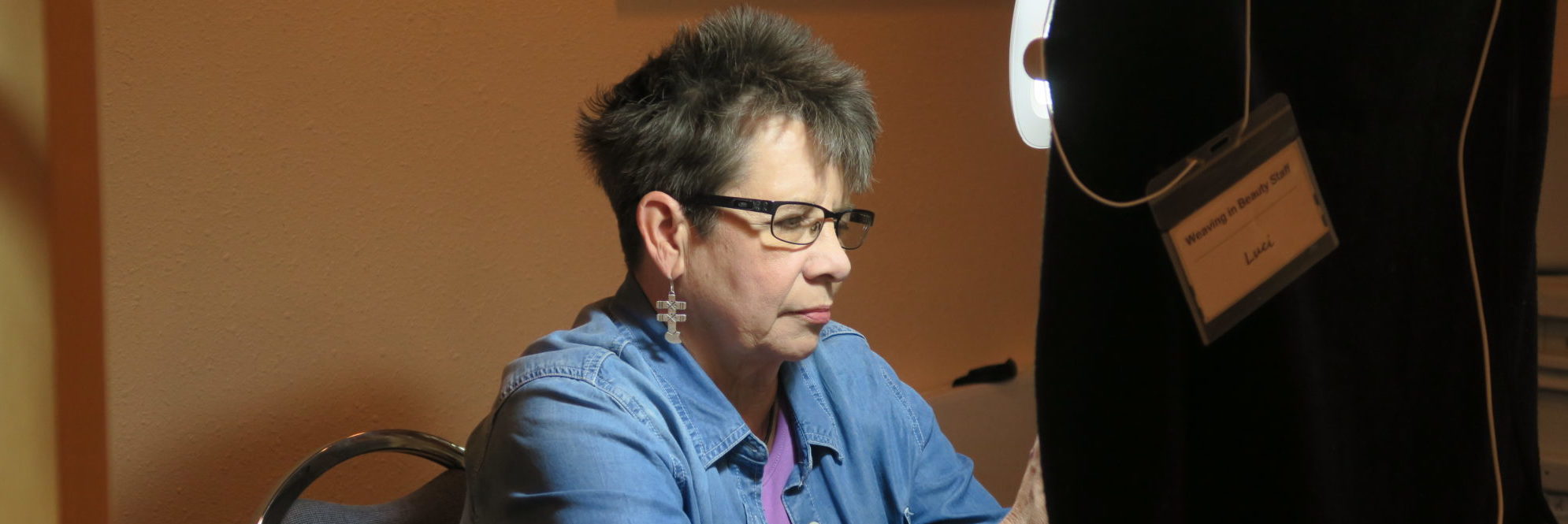
Tuition for the three day workshop is $410 and includes dormitory style sleeping accommodations, three delicious meals per day featuring large quantities of raspberry based foods, a digital copy of our textbook,  use of weaving tools and the instructional support of master weaver Jennie Slick and her assistant Mary Walker (me). If you are a beginning weaver, you can purchase a Starter Kit with all of the yarn, warp and miscellaneous items that you’ll need for $45.  Just add loom (we’ll give you various options for that).   We start loom warping on Sunday afternoon and the looms are generally warped by the time that we go to bed.  We weave our brains out on Monday and Tuesday from about 7 AM to 10 PM.  We’re not kidding, but we won’t make you weave every minute.   Since this is our eighth year, weaving as much as humanly possible for three days straight must be fun!  On Wednesday, we weave up until about 10 AM and then pack up while making plans for next year.  

The workshop is suitable for all experience levels and we don’t assume any prior weaving experience.   We have had students as young as 10 years old and both male and female students are welcome.    

Registration

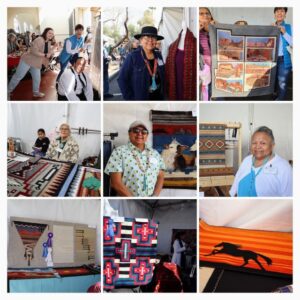
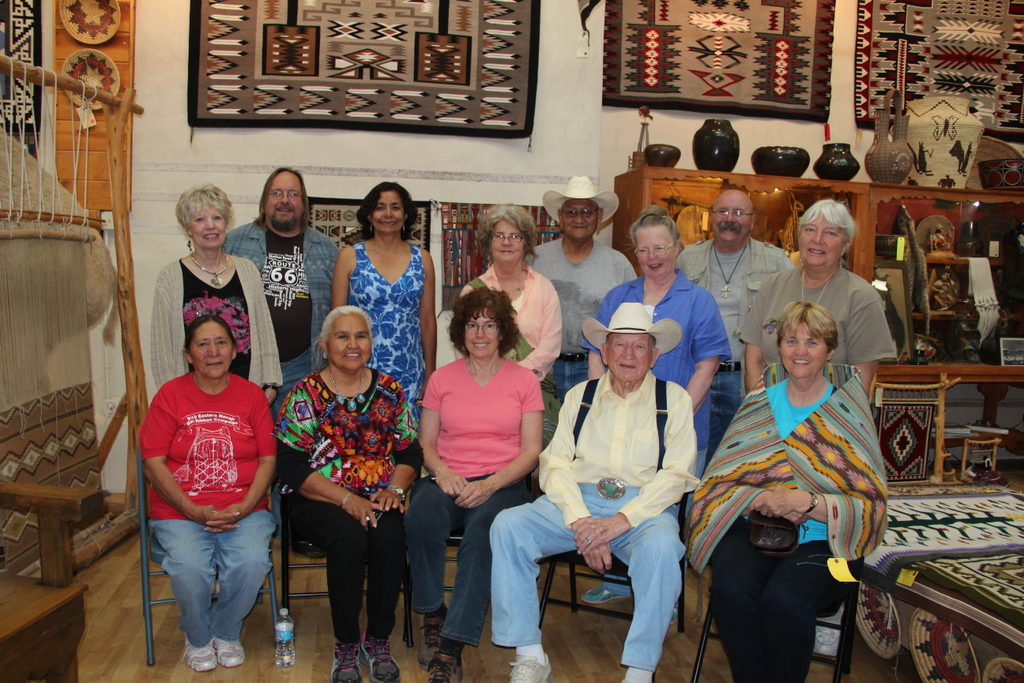
The workshop site is on the shore of Bear Lake, a gorgeously blue natural lake on the border of Utah and Idaho. The site is about three hours by car from the Salt Lake City airport.  The workshop is limited to 12 students and the class is now full. I’ve included a picture gallery from last year’s class below so that you can get a better idea of the setting and the class content.  If you would like to be on the wait list for the class or are interested in next year’s class,  you can contact me.  

Click on any picture for a larger view.

See you at the lake!

Hagoshíí (so long for now)

Mary Walker

Weaving in Beauty LLC
1868 E. LaDonna Dr. TempeAZ85283 USA 
 • 602-370-2875

Comments

comments

There is No Substitute: The Navajo Biil Dress

Master weaver Jane Hyden with relative

Master weaver Jane Hyden with a young relative wearing a biil dress.  Please click to enlarge any image.


Laramie Blake graduation picture

Laramie Blake wears a biil dress in her graduation picture from 2010.

Tempe, AZ   Frequent commenter Kathleen Bernett asked me for a better picture of what really does look like a pink rug in this picture img_0604 (click to enlarge it)  from Sunday’s post about the Heard Museum Indian Fair and Market.  It’s not a rug; it’s a dress, I told Kathleen.  As you can see in the picture above, the young lady who is seated behind master weaver Jane Hyden is wearing what is called in Navajo a biil (pronounced beel) and it is also referred to as a rug dress.  It is composed of two panels, usually warped and woven side by side to ensure that they are identical and then sewn together leaving openings for the neck and arms.  There is usually no shaping, but some weavers have adopted the off-shoulder style that you see above.  Completing the outfit are a squash blossom necklace, a concho belt and traditional moccasins with deerskin leggings.  The poised young lady sitting with Jane said that she felt like a fashion model wearing it.   Young Navajo women who are graduating frequently favor this ensemble over the traditional cap and gown, even getting exceptions to school policy to do so.  You can see weaver Laramie Blake wearing a biil in her 2010 graduation picture at left.  

The biil is one of only two items that Navajo weavers still produce for their own use and to sell to other Navajos, the other being the sash belt.  Although Navajo weavers have been renowned for their blankets for centuries, commercially woven trade blankets by Pendleton, Beacon and other manufacturers replaced the blankets as demand for Navajo rugs grew in the 1890′s.  With rare exceptions, wearing blankets are not woven today and when they are, they are acquired by collectors and not used as apparel.  TahNiibaa Naataanii, who has produced (and worn) gorgeous contemporary shoulder coverings has seen the lack of a Navajo market for Navajo woven apparel and hopes that one will develop.  ”It’s really sad.”, Tahniibaa notes wistfully, “It seems like there’s always money for another Pendleton, but we don’t buy what our own weavers produce.”   When it comes an important event like a graduation, though, if you’re going to make a statement, only a biil will do.  Sometimes at flea markets you see a biil that’s been crocheted or sewn from commercial fabric, but it’s kind of like getting frybread at the Cheesecake Factory.  It might look ok, but it doesn’t have the critical success factors of the original product.  If there’s any way that a family can do it, a traditionally woven biil is purchased, borrowed or custom ordered for the occasion because it honors the history of the Navajo people and the great-great-grandmothers who made this dress a symbol of the Navajo Nation.  And as you’ll see by looking at Laramie Blake in her graduation outfit, it looks really good.  

The biil dress was standard clothing for Navajo women before the Long Walk (which began on this date in 1864).  It developed from items of Pueblo clothing, from even more historic Navajo clothing  and the wool fiber that the Navajos were so proficient at using.  The spinning skills possessed by the weavers in those days were astounding and their access to excellent wool was superior to anything that most of us have today.  They would sort the wool from the dual coated to Navajo-Churro sheep, using the finest of it to spin yarn that Armani and Versace would drool over.  This yarn would be woven into blankets and clothing that would be used and repaired until it could be used no more.  Like today’s biil, these older weavings were simple, often with only one or two bands of patterning in an otherwise plain weave.  Only a few of these pieces survive and they are usually in museum vaults and not often put on display.

In 2010, the Navajo Nation Museum in Window Rock did arrange an exhibit of one of the most historic biil known to exist, a well worn and patched garment that belonged to Juanita, who was married to the great Navajo negotiator and leader Manuelito.  As an older woman, Juanita became friendly with lecturer and journalist George Wharton James.   James’ photography and writings help to popularize Native American art and Juanita eventually gave James her dress, which had been woven sometime around 1868 using Navajo-churro and raveled bayeta wool.  You can see a picture of Juanita’s dress below.  

Juanita's Dress

Juanita’s biil dress.

Click on the icon at right to read the small panel.img_2876-001
If you read the description, you will note that the term “lazy line” is used. I intensely object to and dislike this term, but will rant about it at some later date.  

A resident of California, James donated the dress to the Southwest Museum in Los Angeles when he died and it became part of the collection of the Autry National Center when it acquired the Southwest Museum.  A curator travels with the dress when it is loaned to any other institution.  You can see that Juanita’s dress shares much with it’s more modern descendants and I’ve included two more pictures below that you can click to enlarge and examine.  I know that modern wearers of the biil would love to have something woven from wool as fine as you see in Juanita’s garment, but it probably would make the price even harder to manage!  You can read more about the Juanita’s biil and it’s journey home in this article by Juanita’s great-great-great-granddaughter Dr. Jennifer Nez Denetdale.   You can see a picture of Juanita wearing the dress here.  

 Juanita's Dress Juanita's Dress Detail 
Details of Juanita’s dress (please click to enlarge)

Ready to wear a biil?  Weaver Nathan Harry announced that he is taking orders for this year’s graduation.  Depending on size, he’s quoting a price of about $1200 for a custom woven dress made with commercial wool.  I’m not sure what Jane Hyden or Florence Riggs charge, but I know that they took quite a few orders this weekend for their stunning pictorially paneled biils.  It seems to me that this is a trend that’s growing so maybe my friend TahNiibaa will get her wish!  I don’t think the folks at Pendleton are worried yet, but maybe they should be!  


Hagoshíí (so long for now)

Mary Walker


Comments

comments

Florence Riggs is Signature Artist at Heard Museum Indian Fair and Market’s “Weaving Worlds with Wool”

A Florence Riggs Pictorial in progress

This Pictorial weaving by Florence Riggs was in progress in the demonstration area at the just concluded Heard Museum Indian Fair and Market.  Please click to see it in more detail.

Phoenix, AZ  The Heard Museum Indian Fair and Market closed about fifteen minutes ago.  The theme chosen this year is “Weaving Worlds with Wool” and coincides with the museums’s current “Picture This!” exhibit of Pictorial weaving.  Master Pictorial weaver Florence Riggs of Tuba City is this year’s signature artist and she and her sisters Jane Hyden and Laverne Greyeyes demonstrated their amazing weaving skills all weekend.    Florence is a member of the famous Nez family of pictorial weavers, many of whom reside in the Tuba City area of the Navajo Nation.   Florence and her sisters are the daughters of renowned weaver Laura John Nez and the the daughters of Louise Nez.    

Florence and her sisters weave a style of Pictorial that features expressive faces and realistic action. It incorporates a sense of the wry humor that pervades Navajo life.  The man of the house is often pictured taking it easy while his wife is working at the loom.  Although life in the traditional home is a frequent theme, Florence has branched out to depictions of prehistoric life, including dinosaurs and has even woven the circus!  You can see a picture of one of her forays into the circus below.   A festive tent provides the backdrop as the ringmaster introduces a juggling seal and clown, performing elephants and a horse leaping through a ring of fire.  One of the clowns is pouring water down the pants of one of the others.  Try weaving any one of these things let alone all of them!  

Florence Riggs Circus PictorialFlorence Riggs Circus Pictorial
Move your mouse over image or click to enlarge

Florence Riggs’ incredible Circus Pictorial features juggling seals, clowns pouring water into amusing places and performing elephants. Please click for a closer view.

Florence was so busy all weekend that I didn’t get a chance to talk with her, but it looked like she was having a very good time and she was talking with two young ladies about weaving when I snapped the picture below.

Florence Riggs

Florence Riggs discusses weaving at the 55th Annual Heard Museum Indian Fair and Market.

 I’ll leave you today with a picture of Florence’s sister, Jane Hyden, working on the finish to a weaving depicting the action at a rodeo on the Navajo Nation.  More on the market later this week.  

Jane Hyden finishes a rodeo pictorial

Jane Hyden works on the finish of a Pictorial showing a rodeo on the Navajo Nation.  Please click on the picture for a closer view.


Hagoshíí (so long for now)

Mary Walker


Comments

comments