Dyes that Madder: A Rainbow of Colors from Indigo, Cochineal, Madder and Osage Orange
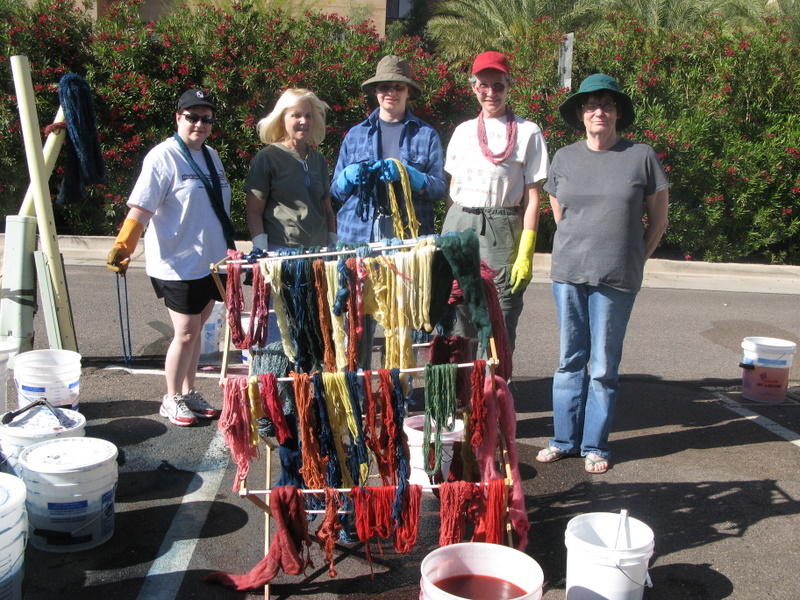
From left, Heather, Sue, Karen, Jaime and Nancy with their dyed samples
Mesa, AZ Last Saturday, I did the second of two dye classes that I do for the Fiber Factory in Mesa, AZ every spring and autumn. The second class builds on the skills from the first class and we add dyestuffs that are a bit trickier to work with but which offer big payoffs in their results. We used freeze dried indigo crystals, cochineal bugs, madder and osage orange. Since we had access to each primary color, any color on the color wheel is possible with some experimentation. As you can see in the picture above, which was taken at the end of the day, we were able to get a nice range of colors.
We started off the day by adding some osage orange sawdust to a pot of water to get a source of yellow. Once that pot was boiling, we started our indigo vats in individual plastic buckets and ground up about six ounces of cochineal beetles to a flour-like consistency and started them boiling in distilled water with some lime juice and a pinch of cream of tartar. As the cochineal color was extracting, we were ready to do our first indigo dips. Students working with indigo have to teach themselves to avoid letting things drip into the vat, as this introduces oxygen that inhibits the ability of indigo to bind to the fiber. “But I’m losing all my dye!”, they shout as blue liquid drips onto the parking lot, when actually they’re saving their dye by doing this. The axiety is quickly replaced by awe and curiosity as the indigo color oxidizes from a pale green to a rich and unmistakable blue. The skein below was dyed late in the afternoon as the vat was exhausting but shows a bit of the range of blues that are possible.
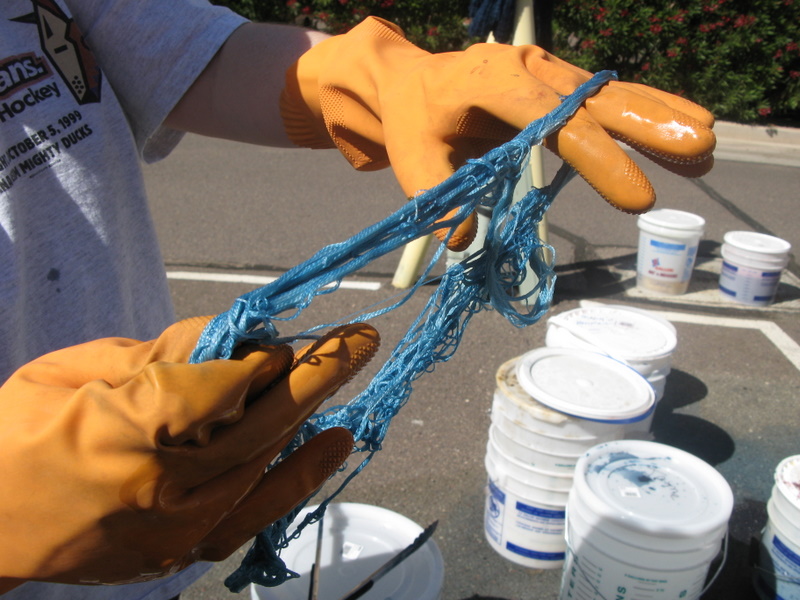
A skein of cotton dyed with inidgo later in the day.
The trick with cochineal is in the control of the acidity and alkalinity of the dyebath. Acid yields the red part of the spectrum, while alkaline dyebaths yield purple and orchid shades. One of the more exciting shades that can coaxed from a carefully controlled bath with stannous chloride (tin) is the brightest red possible in the natural dye spectrum and dates to the early 1600’s. The ability to produce this color, which had never been seen in a dyestuff, was zealously sought by dyemasters from London to Venice. It’s so tricky to achieve given the alkaline water in this area that it took me two tries to get there, but as you can see below, it’s a very beautiful color.
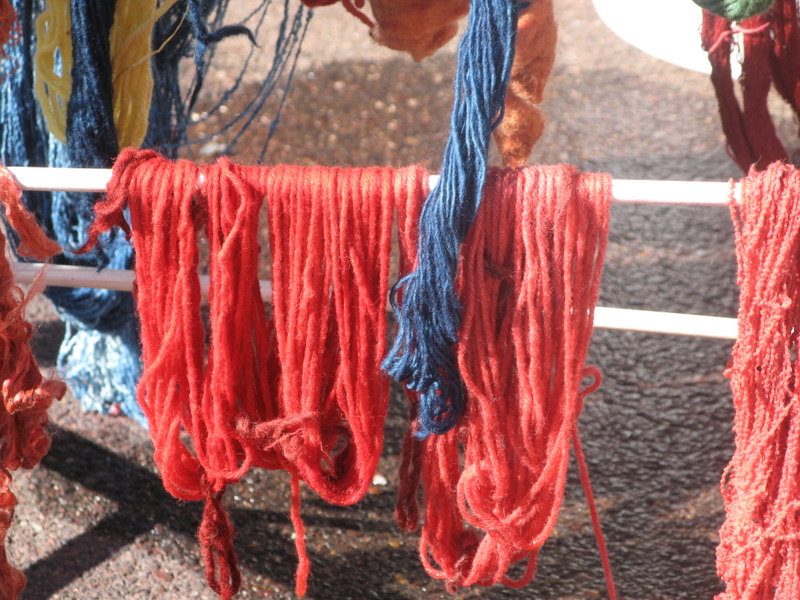
Cochineal skeins mordanted with tin dry with an indigo dyed skein.
Another source of red color is madder, which is one of the original red dyes used in western Asia and in Europe. Madder is the basis of the historic Turkey Red, the most colorfast and brilliant red that was available prior to the introduction of cochineal in the 1520’s. Madder requires very long processing times, and for classes I use a potent powered madder called mungeet that’s used in India. We explored the brick red tones that mungeet produces, but tin mordant also brings out more red tones.
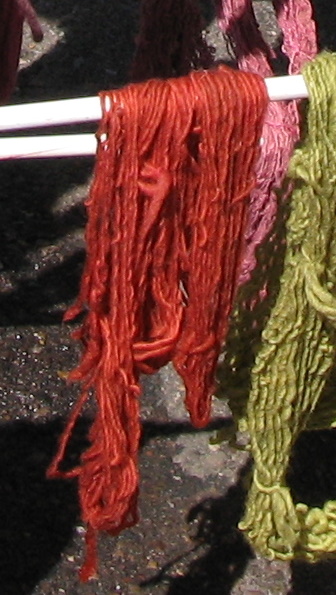
A sample of mungeet dyed yarn
Many of the dyed commercial yarns imported for classic Navajo weavings used these dyestuffs, and modern Navajo weavers continue to work with them to expand the range of design possibility available to them and to increase the value of their work. If you’d like to try some natural dyes, try one of the suppliers below and prepare to be amazed at the ingenuity of the craftspeople who lived before us.
- Freeze dried indigo: John Marshall
- Cochineal and madder: Aurora Silk
- Full range of natural dyes: Griffin Dye Works
Mary Walker
