The Elusive Wild Carrot
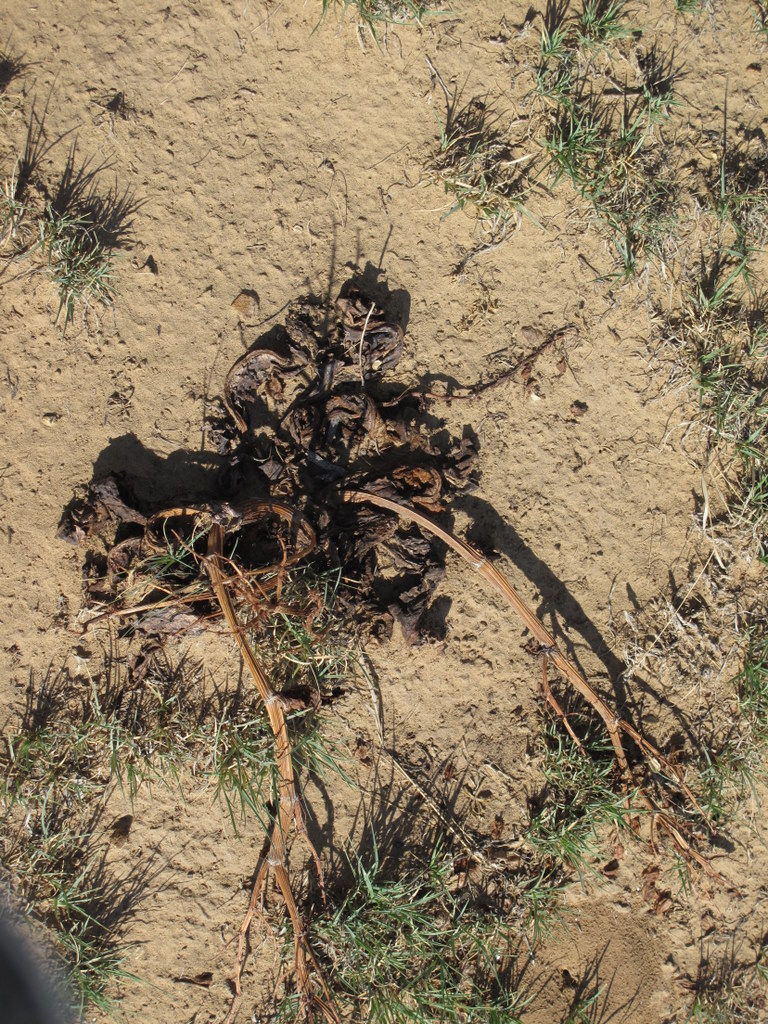
Wild carrot plant ready to harvest
Window Rock, AZ How can it be Wednesday night? We’ve been busy going through our itinerary for this week’s class and I realized I haven’t had time to write this week. Monday, we went wild carrot hunting with Rose Dedman. Wild carrot, also called dock root or canyaigre, has the Latin name rumex hymenosepalus. It grows on sandy mesas in many areas of northern New Mexico and Arizona. The carrot is prized as a dyestuff because it yields a deep burnt orange color that is extremely colorfast. It is high in oxalic acid and requires no mordant. Fans of wild carrot learn to look for the plant’s dark green leaves in the late spring. In the summer, when the leaves have died back is the time to harvest the tuberous roots of the plant for dye. The carrot harvest starts by scouting the selected area for the blackened remains of the leaves, which you can see in the picture above.
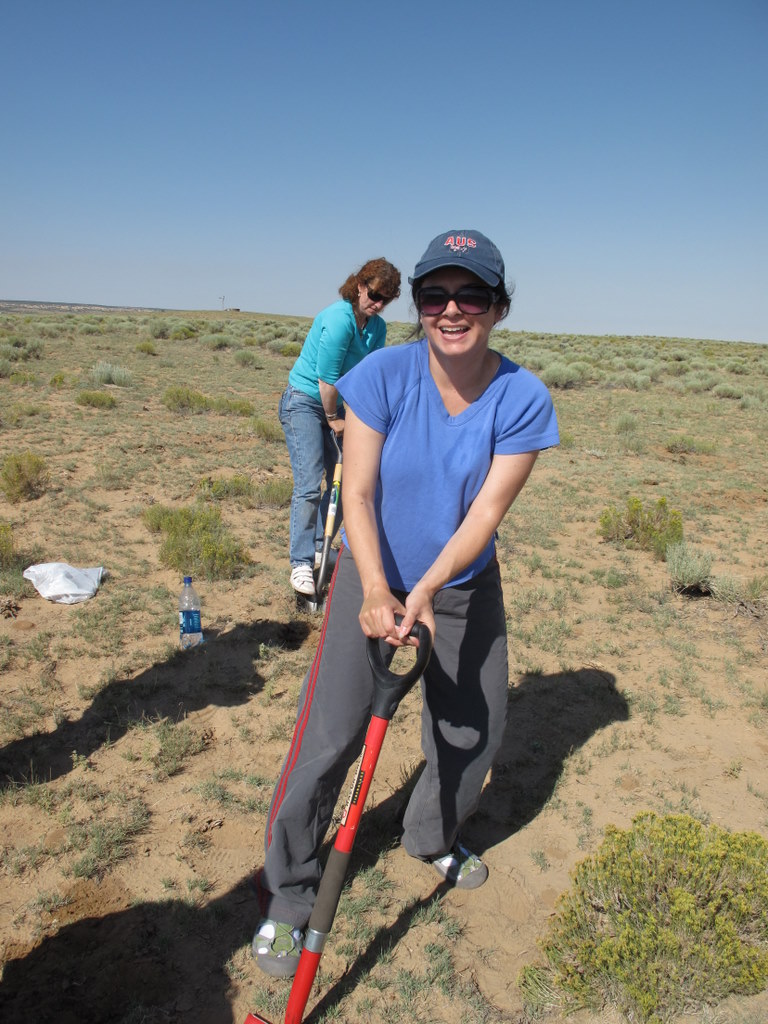
Jeanette Hicks does shovel duty in the carrot hunt.
Once you’ve located the leaf remains, you dig down around them to find the carrots. Although they can be close to the surface, they are more often about a foot or as much as two feet down. We usually work in teams with one person handling the shovel and a second person checking the hole to find the direction that the carrots are growing in. Both new or fresh carrots and dried carrots can be found in the same hole.
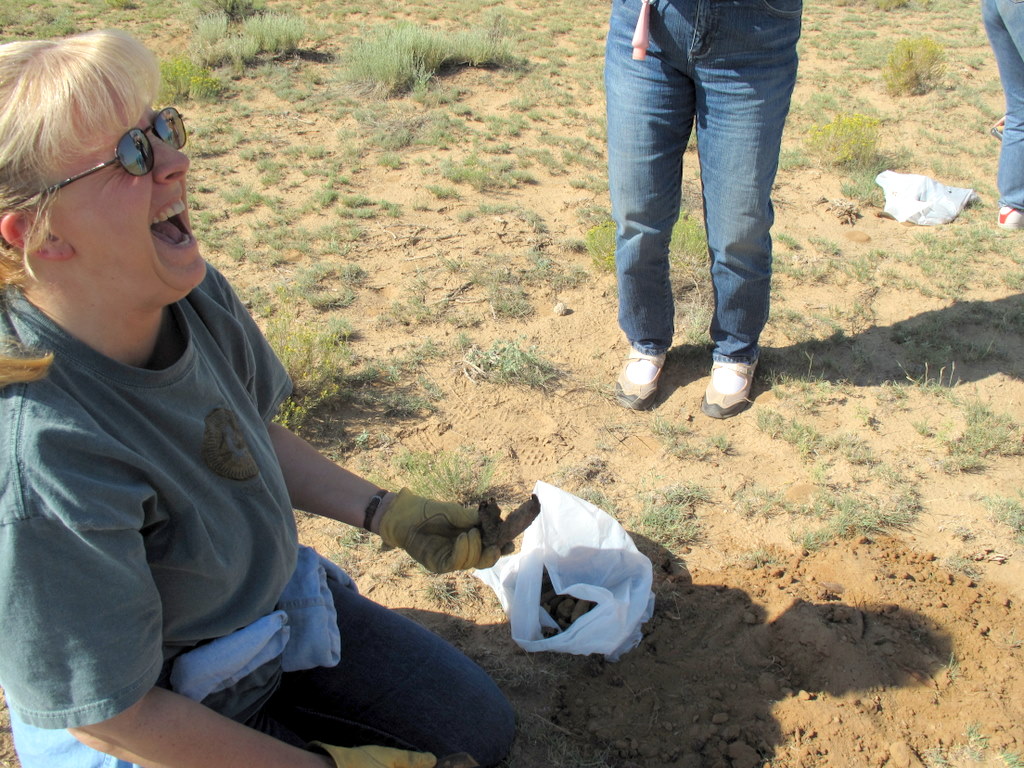
Tammy Denhard enjoys carrot location duty.
Sometimes, the carrots just aren’t there or our inexperienced fingers can’t find them. Rose gently prods us to “dig this way” and we begin to fill bags with the tubers, filling the holes and strategically skipping plants to ensure that we don’t overharvest the spot. Finding the carrots is very satisfying as you can see in the picture above. The carrots that are nicked by the shovel give tantalizing hints of the color potential in the dye pot.
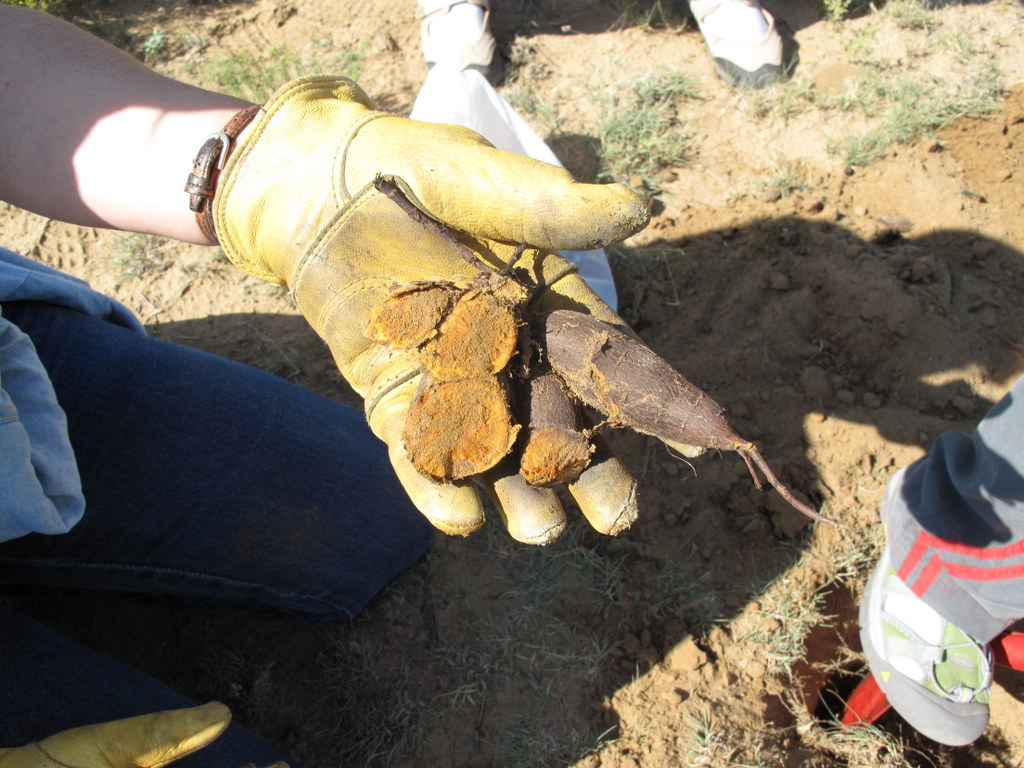
The interior of fresh wild carrots
Before the carrots can be used for dye, they are crushed to help expose the pulp and make it easier to obtain the color. They’re boiled for at least an hour and then the fiber to be dyed is added and simmered for about 30 minutes. The yarns dyed with the wild carrot (see picture below) add rich shading to the textiles woven with them, an accomplishment gained by the discovery and understanding of the gifts of Mother Earth and Father Sky.
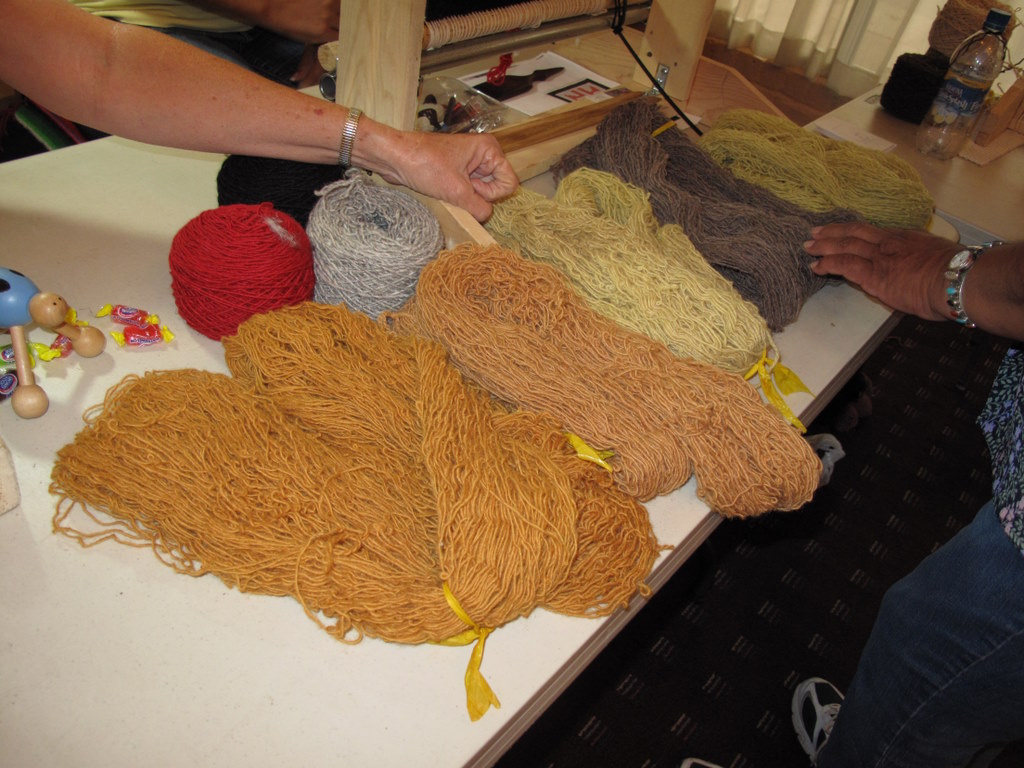
The skeins at left are dyed with wild carrot
Hagoshíí (so long for now)
Mary Walker

Thanks so much Mary for posting the photos and excellent explanations of the wild carrot. I never realized they were also called dock. And to think I have often walked past the wild carrot thinking it of no value. Nevermore!